


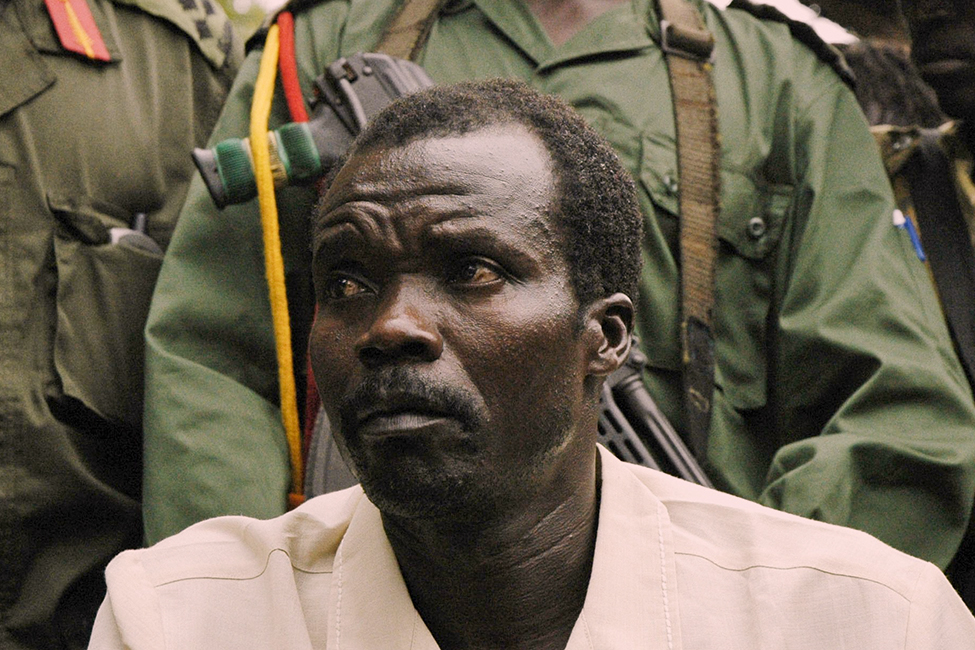
For years, rumours have circulated across northern Uganda that Lord’s Resistance Army leader Joseph Kony might already be dead. But the International Criminal Court has now confirmed that Kony is alive and still beyond reach.

ICC senior trial lawyer Leonie Von Braun told journalists last week that all intelligence gathered by the court points in one direction.
“All our information… points to the fact that he is still alive. Otherwise, we would not have proceeded with the confirmation in absentia,” she said.
The announcement has reopened deep wounds in communities still living with the trauma of the LRA’s atrocities killings, abductions, sexual slavery, and widespread displacement.
Charges Confirmed, but No Trial Without Arrest
Nearly 20 years after the ICC issued an arrest warrant and Interpol placed Kony on its red notice list, he remains a fugitive roaming remote parts of Central Africa.
Last month, the ICC confirmed 39 charges against him, including murder, rape and sexual enslavement. However, Von Braun warned that the confirmation marks the end of what the court can do without Kony physically in custody.
“We will not have a trial unless he is arrested and appears before judges in The Hague,” she said.
“The ICC rules do not allow a full trial in absentia.”
This limitation intended to protect defendants’ rights has frustrated survivors who have waited decades for justice.
Why Arresting Kony Remains Difficult
Von Braun said efforts to capture Kony are ongoing but complicated. The ICC relies entirely on partner states because it has no police or military force of its own.
She declined to name the countries involved, calling the information too sensitive, but noted that Kony is believed to hide in remote regions controlled by states that have not signed the Rome Statute, making cooperation even harder.
“That already gives you an indication of why it is difficult to secure his arrest,” she added.
A Historic But Painful Moment
ICC international cooperation adviser Dahirou Santa-Anna said this is the first time judges have confirmed charges against a suspect who was not in court an important legal milestone, but also a reminder of how long Kony has evaded justice.
He pointed out that the pursuit of justice for victims has never relied solely on a trial. For more than 15 years, the Trust Fund for Victims has provided medical care, psychosocial support and community rehabilitation programmes across northern Uganda.
“The efforts did not wait for conviction before providing assistance,” Santa-Anna said.
Hope and Frustration in Equal Measure
For many survivors, these programmes offer the only visible form of justice. Still, each update that Kony is alive stirs mixed emotions hope that he may one day be arrested, and frustration that he continues to slip away.
Nearly two decades later, Joseph Kony still casts a long shadow across the region across borders, across generations, and across the memories of communities still trying to heal.