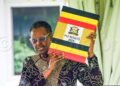





ACCRA, October 24 – The Government of Ghana has announced a new education policy making the use of local languages compulsory as the main medium of instruction in all basic schools.
Education Minister Haruna Iddrisu unveiled the directive on Friday, describing it as a bold move to boost learning outcomes and preserve the nation’s cultural identity.
“From today, teacher use of mother-tongue instruction is now compulsory in all Ghanaian schools,” the Minister declared.
The policy marks a significant shift from decades of English dominance in Ghana’s education system.
Why the Change?
Research by UNESCO and the World Bank supports mother-tongue education, showing that children learn faster and gain confidence when taught in their first language, especially at the early stages of schooling.
The Ghanaian government says the new approach is also a step toward reclaiming cultural pride after years of using English a colonial legacy as the language of instruction. Similar initiatives are being explored in Kenya, Tanzania, and South Africa.
Challenges Ahead
Ghana faces a complex linguistic landscape with over 70 local languages, 11 of which are officially recognized for education and broadcasting, including Akan (Twi, Fante), Ewe, Ga, Dagbani, and Nzema.
In cities like Accra and Kumasi, classrooms are often linguistically mixed, making it difficult to choose a single language of instruction. The government says schools will use the dominant local language in each area.
There’s also concern about limited teaching materials. Most textbooks are currently written in English, and translating them along with retraining teachers will take time.
“It’s a good idea, but we’re not ready,” said Freda Serwaa, a basic school teacher in Kumasi. “We’ll need books and training in many languages.”
Ghana tried a similar policy in the early 2000s, but it collapsed due to inadequate funding, poor implementation, and parental fears that it would weaken English proficiency.
A Continental Debate
Ghana’s move adds to an ongoing African conversation about balancing cultural identity and global competitiveness.
Countries like Tanzania and Ethiopia have championed mother-tongue education with mixed outcomes. While critics warn that reducing English or French instruction too early could disadvantage students globally, others say maintaining colonial languages continues to alienate African learners.
“We want to preserve our identity, but we can’t ignore the realities of global communication,” said Dr. Ernest Kissi of the Kwame Nkrumah University of Science and Technology.
What Lies Ahead
If Ghana succeeds, it could become a model for other African nations seeking to make education more inclusive and culturally relevant. But experts warn that success will depend on teacher training, availability of learning materials, and strong political commitment.
For now, Ghana’s bold new policy signals one clear message — the country is ready to make its classrooms speak in its own voice