



Title: Lake Mwitanzige — The Locust Slayer
Once upon the shifting winds and tides of history, there stood a great body of water between Uganda and the Democratic Republic of Congo—known today as Lake Albert. But long before colonial maps and foreign names, the local people knew the lake by another, far richer name: Mwitanzige, the locust killer.
It was 1955, and a young Ashraf Nyorano Mugenyi lived in the village of Butanjwa near the lake. He was eleven when an enormous swarm of locusts darkened the skies. They devoured every patch of grass, stripped crops clean, and seemed unstoppable. But then, as the swarm reached the vast expanse of the lake, something miraculous happened. Exhausted and befuddled, the locusts mistook the shimmering water for grass and descended—but the lake held them—many fell into its depths; others crashed against its shores. Those that survived vanished, never to ravage the land again
To Mugenyi’s people, this was no mere coincidence. The lake had acted as protector—nature’s sentinel that halted the scourge. Elders whispered that Mwitanzige, the “locust killer,” watched over them. Among the Alur, a parallel tribute emerged: Nam Ovoyo Bonyo—“the lake that has defeated the locusts.” Both names, in different tongues, spoke the same truth: this lake was guardian, memory, and hope Wikipedia.

In 1864, Sir Samuel Baker and Flora von Sass came and baptized the lake “Lake Albert,” in deference to British royalty. Later, President Mobutu briefly claimed it under his own name. But through all the changes, the elders of Bunyoro and Toro kept speaking of Mwitanzige—a name stronger than any decree, anchored in memory and the miracle of that fateful invasion
Lake Mwitanzige is more than water. It is memory. It is resilience. It is the story of a land that outlasted a plague and a people who honored their savior with a single, enduring name.

Location of Lake Albert
Situated on the border between Uganda and the Congo, Lake Albert is the northernmost lake in the Great Rift Valley.

The primary rivers flowing into the lake are the Semliki River from Lake Edward, and the Victoria Nile from Lake Victoria through Lake Kyoga.
The spectacular Congolese mountains in the east, the Rwenzori Mountains in the south, and the striking rocky escarpment in the west form part of the dramatically beautiful landscape that surrounds Lake Albert. Lake Albert is a worthwhile stop on your travels further south to Kibale Forest and Queen Elizabeth National Park.
Lake Albert has a serene natural beauty and a tranquil atmosphere, and is a great spot to unwind after a few day’s exploring the Murchison Falls National Park.
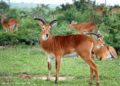
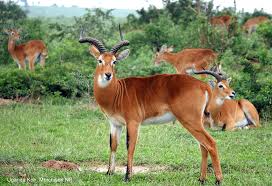
Lake Albert is home to a host of wonderful wildlife, including hippos, crocodiles, buffalo, waterbuck, oribi, duiker, warthog, leopard, black-and-white colobus monkeys, and the olive baboon.
The area is a birdwatcher’s haven, with an unofficial count of up to 460 species of bird.
Many of the animals at Lake Albert live in the Kabwoya Wildlife Reserve. A section of the lake sits within the reserve.
Wildlife can be observed up-close by exploring the reserve by foot, quad bike, and mountain bike.
The Semliki Wildlife Reserve, on the southern tip of Lake Albert, also has some brilliant opportunities for viewing wildlife including elephants, chimpanzees and the incredibly rare and endangered shoebill stork.
This story is based on research made by other people, you can also research more on this story.
Thank you for reading the story
By Ikiriza Zephania Atwooki