

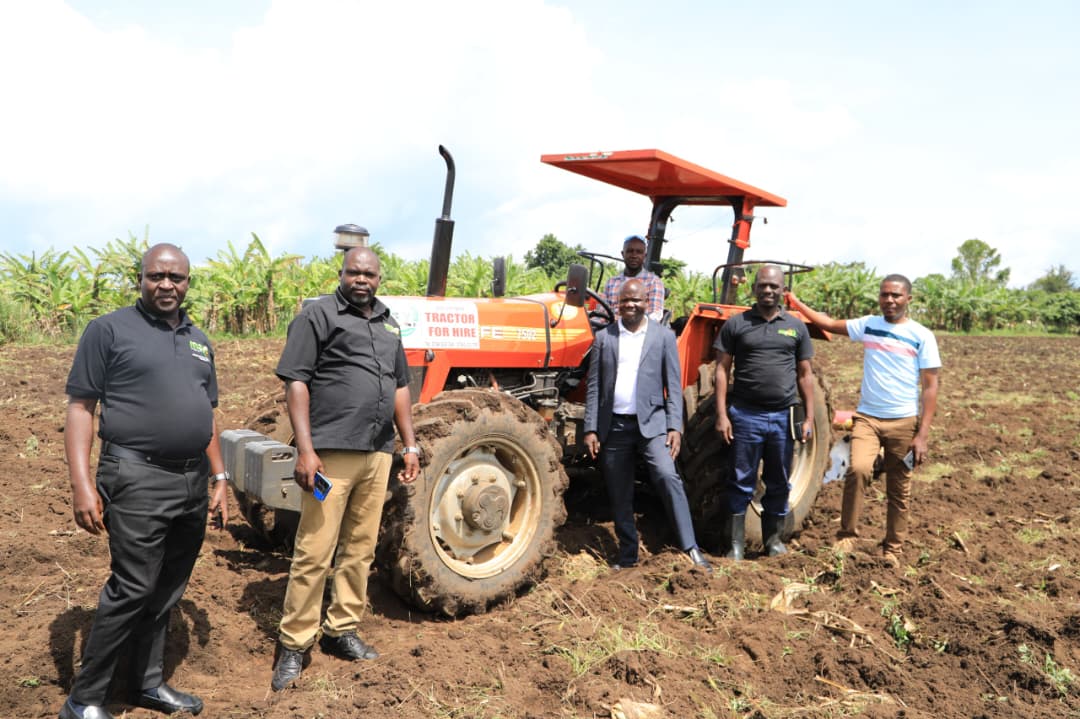
Farmers in Kabarole District are witnessing a shift toward more efficient and productive agriculture following the introduction of mechanised land preparation through the Local Economic Growth Support (LEGS) Project.
The initiative, which is funded by the Government of Uganda in partnership with the Islamic Development Bank and implemented by the Microfinance Support Centre, is designed to boost rural incomes and accelerate economic development in 17 districts across the country.
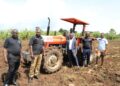
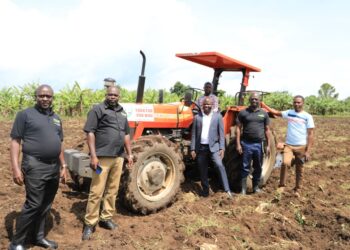
In 2024, the LEGS Project supported Kijura SACCO Ltd with a tractor to help farmers overcome the challenges of costly and time-consuming manual land preparation.
The tractor was acquired through a co-funding arrangement in which the government contributed Shs84 million (60%) while the SACCO raised Shs56 million (40%), bringing the total investment to Shs145 million.
Since its introduction, farmers say the tractor has reduced the cost of land preparation and allowed them to plant on time, ultimately improving crop yields.
Robert Abigaba, a farmer from Munsiso Village in Kabende Sub-county, says the tractor has transformed farming activities for SACCO members.
“Since the SACCO acquired the tractor, it has made a big difference in our farming activities. The time spent preparing land has reduced and we are now able to plant within the right season,” Abigaba said.
Previously, farmers relied on manual labour, which was both slow and expensive.
“Preparing one acre used to cost about Shs250,000 when using labourers, and it would take up to four days. With the tractor, we now pay around Shs120,000 per acre, and the work is completed in a much shorter time,” he explained.
The availability of mechanised services has also encouraged farmers to expand their farmland.
Abigaba says he increased the size of his farmland from nine acres to sixteen acres after gaining access to the tractor.
According to him, the improved land preparation has also led to better harvests.
“When we were farming manually, I would harvest about five to seven bags of maize per acre. After we started using the tractor, the yield increased to around ten bags per acre,” he said.
He attributes the increase partly to deeper soil tilling, which improves soil fertility.
“When a tractor ploughs, it digs deeper into the soil and buries grass and crop residue, which later decomposes and turns into manure. This improves soil productivity,” he explained.
Despite the progress, Abigaba says demand for the tractor remains high and called for additional equipment such as another tractor and a planter.
Gerald Ngiramahoro, the General Manager of Kijura SACCO, says the tractor has not only improved productivity but also attracted more farmers to join the cooperative.
“We thank the Government of Uganda through the LEGS programme for providing us with a tractor that is helping smallholder farmers cultivate their land and increase productivity,” Ngiramahoro said.
The tractor was delivered in January 2024, and since then many farmers have expanded their acreage and improved household incomes.
Ngiramahoro noted that the SACCO deliberately set lower service charges to ensure farmers can afford mechanised ploughing.
“Private tractors were charging around Shs250,000 per acre, which many farmers could not afford. For our members, we charge between Shs100,000 and Shs140,000 depending on the terrain,” he said.
He added that the availability of the tractor has significantly increased membership.
“Last year alone, we registered about 2,400 new members, many of whom joined specifically to benefit from tractor services,” Ngiramahoro said.
Kijura SACCO currently has about 10,000 members, with its primary focus being to support farmers in transitioning from subsistence farming to commercial agriculture.
The tractor’s services have attracted farmers from neighbouring districts, including Kyenjojo, Bunyangabu, and Kasese, highlighting the growing demand for mechanised agriculture in the region.
Ngiramahoro said the SACCO initially expected the tractor to serve farmers within Kabarole District, but requests from surrounding areas continue to increase.
Beyond improving farm productivity, the tractor has also created employment opportunities.
Rashid Mwesigwa, who operates the tractor, says the job came at a critical time in his life after two years of unemployment.
“I had stayed home without a job for two years while struggling with bank loans and building my house. When the SACCO acquired the tractor, they were looking for an experienced operator and I was given the opportunity,” Mwesigwa said.
He now ploughs an average of 14 acres a day and says the job has helped him clear his debts, complete his house, and support his family, including a child currently studying at university.
Officials from the Microfinance Support Centre are currently conducting a week-long inspection of LEGS Project activities in the Kabarole zone to evaluate the initiative’s impact on farmers and local communities.
The LEGS Project aims to reduce poverty and improve livelihoods by supporting farmer groups, strengthening agricultural production, improving water infrastructure, and expanding market access across the 17 participating districts.