
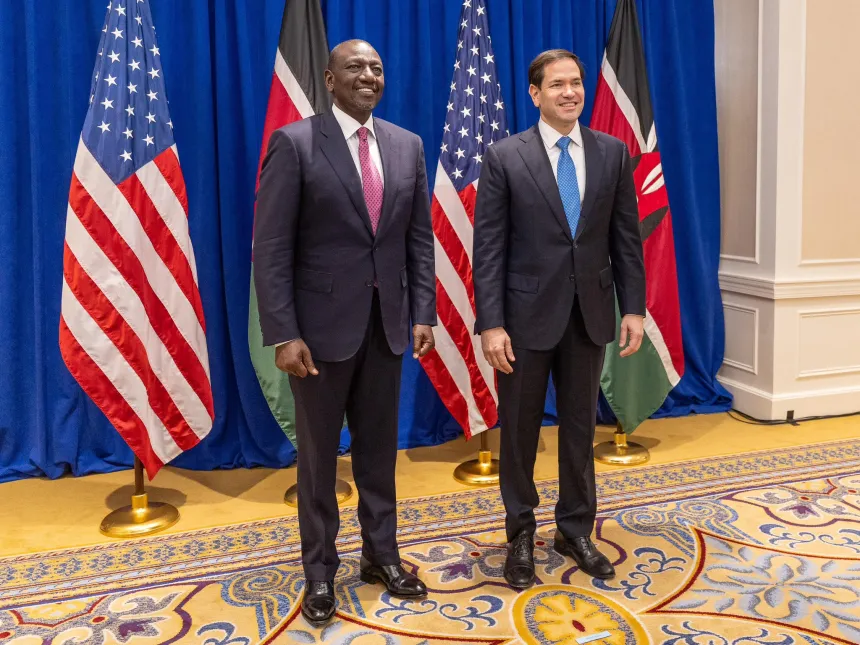
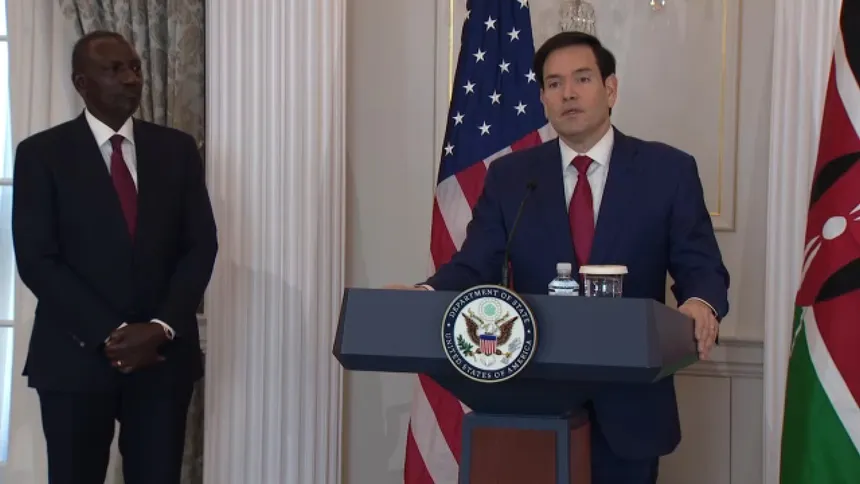

The United States and Kenya on Thursday signed the first in what the Trump administration says will be dozens of new “America First” global health agreements reshaping how Washington delivers foreign aid.
The deal is part of a sweeping overhaul that shifts more responsibility to lower-income countries for tackling diseases such as HIV/AIDS, malaria, tuberculosis and polio.
Speaking at the signing ceremony in Washington, US Secretary of State Marco Rubio said the new approach emphasizes long-term independence rather than reliance on foreign assistance.
“So this is truly a partnership,” Rubio said. “True assistance is self-sustainability building the ability to sustain yourself in the long term.”
The five-year, $2.5 billion agreement replaces a series of older programmes previously managed by the now-dismantled US Agency for International Development. Under the new framework, US funding will move away from non-governmental organizations and flow directly to the Kenyan government, which will gradually take over funding for health workers currently paid by the US.
Kenya, in turn, has committed to increasing its own health spending by $850 million over the next five years.
President William Ruto said the agreement strengthens their shared commitment to more resilient health systems.
“The framework we signed today adds momentum to my administration’s universal health coverage,” Ruto said, pointing to plans for modern equipment in hospitals, more reliable delivery of medicines, a stronger health workforce, and expanded health insurance access.
US officials say several other African countries are expected to sign similar agreements in the coming days. However, Nigeria and South Africa are not likely to join due to political differences with President Trump.
The dismantling of USAID has sparked widespread concern among global health experts, who warn that hundreds of programmes—including those supporting maternal and child health, nutrition, and HIV/AIDS prevention have already lost funding as a result.