


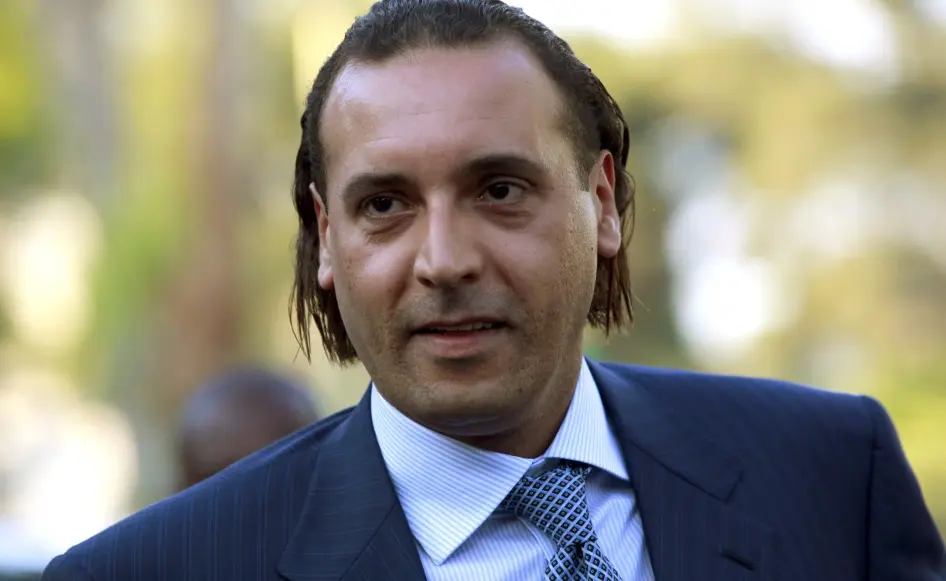
Lebanese judicial authorities have lifted a travel ban and reduced bail conditions for Hannibal Gaddafi, the son of late Libyan leader Muammar Gaddafi, opening the door for his long-awaited release after nearly ten years in detention without trial.

Hannibal Gaddafi was arrested in 2015 and accused of withholding information about the disappearance of Imam Musa al-Sadr, a prominent Lebanese Shi’ite cleric who went missing during a visit to Libya in 1978. At that time, Hannibal was only two years old.
Bail Reduced After Libyan Delegation Visit
Thursday’s decision came shortly after a Libyan delegation visited Beirut to discuss the case. In October, a Lebanese judge had ordered Gaddafi’s release on $11 million bail, but the amount was later deemed excessive, and a travel ban was imposed.
Judicial officials now say the bail has been reduced to approximately $900,000, and Gaddafi will be allowed to leave Lebanon once it is paid. Sources close to the case report that he plans to depart the country soon, with his family expected to follow later.
Years of Detention and Deteriorating Health
Hannibal Gaddafi, who had been living in exile in Syria with his Lebanese wife, Aline Skaf, and their children, was abducted in 2015 by Lebanese militants and later handed over to security forces. He has remained in custody ever since, without formal charges or trial.
In 2023, Libya formally requested his release, citing serious health concerns after he went on a hunger strike to protest his continued detention.
A Case That Still Divides Lebanon
The fate of Imam Musa al-Sadr remains one of Lebanon’s most sensitive political and religious issues. Al-Sadr, who would be 96 years old today, was the founder of a Shi’ite movement that later evolved into a political and armed faction during Lebanon’s civil war (1975–1990).
While his family maintains hope that he may still be alive in a Libyan prison, most Lebanese believe he was killed shortly after his disappearance.
Background: Gaddafi Family Legacy
Muammar Gaddafi ruled Libya for more than four decades before being overthrown and killed during the country’s 2011 uprising. His family members fled across the Middle East and North Africa, facing sanctions, exile, and prosecution in multiple countries.
Hannibal’s release marks another chapter in the long, complicated aftermath of the Gaddafi regime and its enduring influence on regional politics.